EQ Saturday Sapience #182
Equity Intelligence 1st August 2026
"It's not whether you're right or wrong that's important, but how much money you make when you're right and how much you lose when you're wrong." — Stanley Druckenmiller

Why Project Kusha Matters – This week's Ctrl Alt Defence discusses Project Kusha, India's next-generation indigenous long-range air defence programme, designed to eventually reduce reliance on imported platforms such as Russia's S-400 defence system. Rather than a single missile, it is a layered network of interceptors, radars, sensors and command systems designed to defend against future stealth threats. The real advantage isn't just replacing an imported weapon—it is owning the technology. As air defence evolves into a network of missiles, sensors and even laser weapons, the battlefield is beginning to resemble Star Wars more than traditional warfare. Watch more
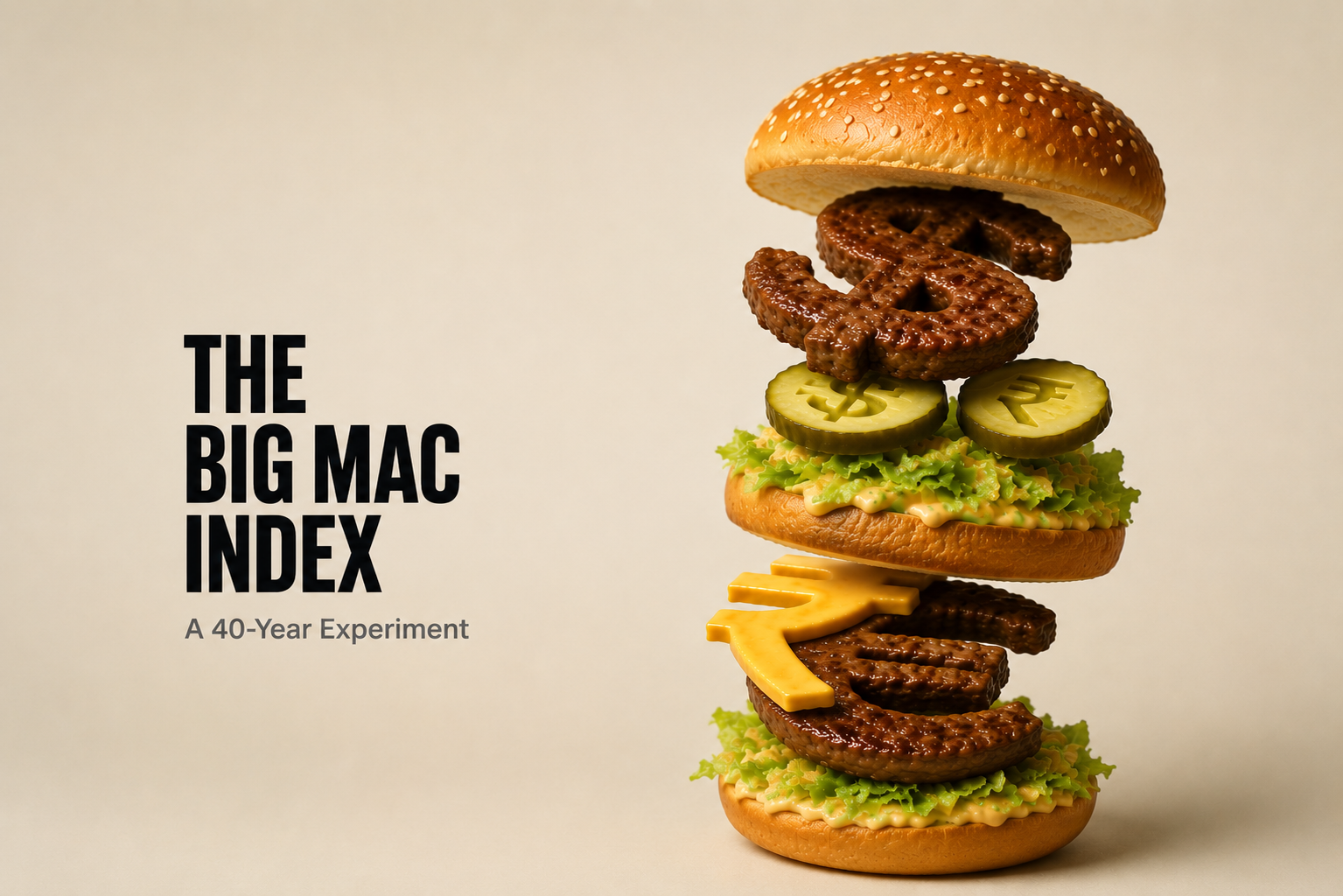
The Big Mac Index - For 40 years, The Economist’s Big Mac Index has used the price of a hamburger to explain a simple idea: currencies should eventually reflect what money can actually buy across countries. India uses the Maharaja Mac as a proxy, and the January 2026 index suggests the rupee is 58.9% undervalued on the raw measure. This doesn’t necessarily mean the rupee should appreciate by that amount; differences in wages, productivity and local costs matter. Sometimes, an exchange rate is easier to understand through the price of a burger than through an economics textbook. Read more
Giving Away Ownership, Not Just Wealth - Dr. Krishna Chivukula, founder of Indo-MIM, donated a 1% stake in his company to IIT Madras years before its IPO. As the company listed, that gift created one of the largest donations ever received by an Indian educational institution—while IIT Madras continues to retain part of its holding for future value creation. The story is a reminder that long-term wealth is often created through ownership. Sometimes, the most meaningful philanthropy isn't writing a cheque—it's sharing in the value that has yet to be created. Read more
When Is a Bank Truly "Back"? Five years after its 2020 crisis, Yes Bank has largely repaired its balance sheet—profits have recovered, bad loans have fallen sharply, deposits have grown and capital levels remain healthy. Yet, as Finshots points out, a bank's recovery cannot be judged by a single quarter's results. The real test lies in a combination of factors: consistent profitability, prudent lending, adequate capital and, perhaps most importantly, stronger governance and risk management. A repaired balance sheet is only the first step; the turnaround is complete when people trust it again. Read more
Disclaimer:
The content of this newsletter include links to third-party websites as a convenience, and the inclusion of such links does not imply any endorsement, approval, investigation, verification or monitoring by Equity Intelligence India Pvt Ltd. If you choose to visit the linked sites, you do so at your own risk, and you will be subject to such sites' terms of use and privacy policies. Nothing in this newsletter should be construed as investment advice. The information contained herein is only as current as of the date indicated and may be superseded by subsequent market events or for other reasons. There is no guarantee that the information supplied is accurate, complete, or timely.